Hiring the right employee takes time, and the last thing you want is to discover a problem after they’ve already started. Whether you’re trying to keep your workplace safe, meet industry regulations, or simply make confident hiring decisions, having the right pre-employment screening process can save you time, money, and unnecessary risk.
The challenge is knowing which screenings your business actually needs. Background checks, drug testing, physicals, and job-specific health screenings all serve different purposes, and the right combination depends on the role you’re hiring for. Here’s what employers should know before day one.
What Is Pre-Employment Screening?
Pre-employment screening is the set of checks an employer completes on a candidate before they begin work, or as a condition of a job offer. What is pre-employment screening in practical terms? It is an umbrella that usually covers four separate things: a pre-employment background check, a drug test, a physical exam, and job-specific health screenings.
Each of these answers a different question. A background check reviews a candidate’s history. A pre-employment drug test addresses current substance use. A physical and related health screenings assess whether a person can meet the physical demands of the role. A well-designed pre-employment screening process applies the combination that fits the job rather than testing every hire the same way. An office position and a role that involves heavy lifting on a noisy plant floor call for different checks.
What Does a Pre-Employment Physical Include?
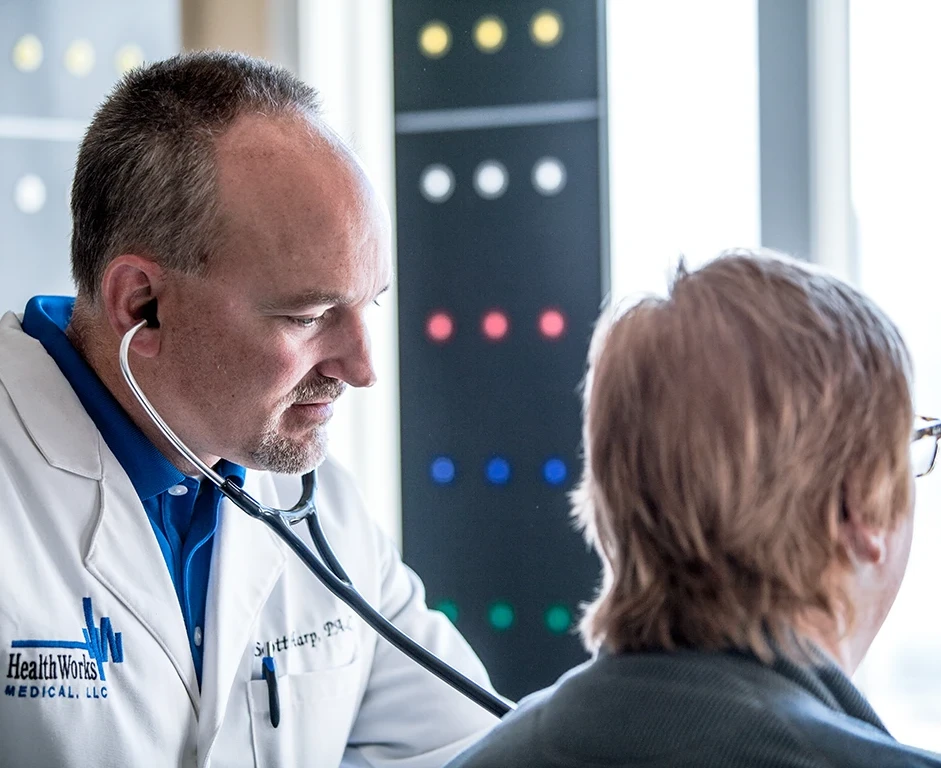
A pre-employment physical is a clinical exam that confirms a candidate can safely perform the essential functions of the job they have been offered. What is a pre-employment physical in practice? It generally includes a review of medical history, vital signs such as blood pressure and pulse, vision and hearing checks, and an assessment of strength, mobility, and range of motion. For physically demanding roles, it may add job-specific tasks such as lifting or carrying that reflect the actual work.
Timing is important here. Under the Americans with Disabilities Act, an employer generally cannot require a medical exam until after it has extended a conditional job offer, and any exam it requires must apply to everyone entering that job category and be kept confidential in separate files [1]. Managing this sequence and recordkeeping correctly is one reason many employers rely on a clinical partner for occupational health services rather than handling it internally.
Drug Testing: What Employers Are Required to Check
A pre-employment drug test is one of the most common screening steps, but what it must include depends on the type of work. For most private employers, drug screening is a policy decision. The company chooses whether to test and which substances to include, and it can tailor the panel to its industry.
For safety-sensitive roles regulated by the Department of Transportation, with commercial drivers being the largest group, the requirements are set by federal law. DOT drug tests require laboratory testing for five classes of drugs: marijuana, cocaine, opiates, amphetamines and methamphetamines, and PCP [2]. Employers covered by these rules must use the federal panel to meet the requirement, though they may add separate non-DOT testing under their own authority. A pre-employment drug screening for a DOT-covered driver and one for a warehouse associate may look similar, but only one is governed by federal law.
Drug testing is also an area where outdated assumptions persist, from how long substances remain detectable to what a positive result actually means. Before your team finalizes a policy, it is worth reviewing some of the common drug testing myths. One point to keep clear from the start: a drug screen and a physical measure different things, and passing one says nothing about the other.
Health Screenings and Why They Matter for Physical Roles
Beyond the standard physical, many employers add targeted health screenings for jobs with specific hazards or demands. A pre-employment health screening establishes a baseline and confirms a worker can handle the conditions they will face on the job.
In a loud manufacturing plant, that may mean a baseline hearing test, so that future changes can be measured against a known starting point. For workers who will wear respirators, it can include a pulmonary function test and respirator clearance. Roles that involve heights, heavy equipment, or repetitive lifting may call for vision testing or a musculoskeletal assessment. These screenings are not meant to exclude candidates. Their purpose is to match the right person to the right job under the right conditions, which is what keeps injuries and reportable incidents down over time. For employers measured on safety performance, this is often the most valuable part of the program.
The Difference Between a Background Check and a Medical Screening
These two terms are often used interchangeably, though they should not be. They are different tools, governed by different rules, and usually performed by different providers.
A pre-employment background check is records-based. It answers the question of what a candidate’s history shows and can include criminal records, past employment, education, and driving history. When an employer hires a third-party company to compile that information, the report is treated as a consumer report under the Fair Credit Reporting Act (FCRA), which the FTC enforces [3]. The law sets specific steps. Most notably, the employer must give the applicant a written, stand-alone notice and obtain written permission before requesting the report. Skipping that paperwork is one of the most common and most avoidable compliance errors.
A medical screening, which includes the physical, the drug test, and any health screenings, is clinical. It answers whether a person can safely perform the job and is governed by health and safety rules rather than the FCRA. Because the two processes operate under different rules, employers often end up coordinating a background-check vendor and a separate clinic, with results arriving in different places on different timelines. That kind of fragmentation slows hiring, and slower hiring can cost a company strong candidates.
What to Look for in a Pre-Employment Screening Provider
When evaluating pre-employment testing services, a few qualities separate a true partner from a vendor that simply runs tests:
- Compliance expertise. The provider should understand the regulatory requirements for your industry, including DOT, Coast Guard, and public safety standards, and keep you compliant without requiring you to become the expert yourself.
- A single source for testing. Drug testing, physicals, and health screenings handled by one provider means one point of contact, one timeline, and one consistent set of records.
- Speed and consistency. Reliable turnaround keeps start dates on schedule, and standardized documentation protects you if a hiring decision is ever questioned.
- Knowledge of your specific jobs. A provider that learns what your roles actually require can build screening that fits the work instead of applying a generic checklist.
How Healthworks Approaches Pre-Employment Services
Healthworks Medical was built to manage the entire pre-employment screening process for employers. Instead of coordinating a background-check vendor, a drug-testing lab, and a clinic separately, you receive drug testing, physicals, and job-specific health screenings together, delivered by clinicians who understand both the medicine and the compliance behind it.
This includes regulatory programs that many general clinics do not specialize in, such as DOT, Coast Guard, and police and fire screenings, along with programs customized to your specific roles and risks. The objective is straightforward: faster and safer hiring, fewer reportable incidents, and a process you can trust to remain consistent and well documented.
If you are building a pre-employment screening program or reconsidering the one you have, contact Healthworks to schedule a call. We begin by understanding your jobs and your goals, then recommend a program that fits, making employer healthcare easier to manage.
Works Cited
- U.S. Equal Employment Opportunity Commission. “Pre-Employment Inquiries and Medical Questions & Examinations.” https://www.eeoc.gov/pre-employment-inquiries-and-medical-questions-examinations
- Federal Motor Carrier Safety Administration. “What substances are tested?” https://www.fmcsa.dot.gov/regulations/drug-alcohol-testing/which-substances-are-tested
- Federal Trade Commission. “Using Consumer Reports: What Employers Need to Know.” https://www.ftc.gov/business-guidance/resources/using-consumer-reports-what-employers-need-know